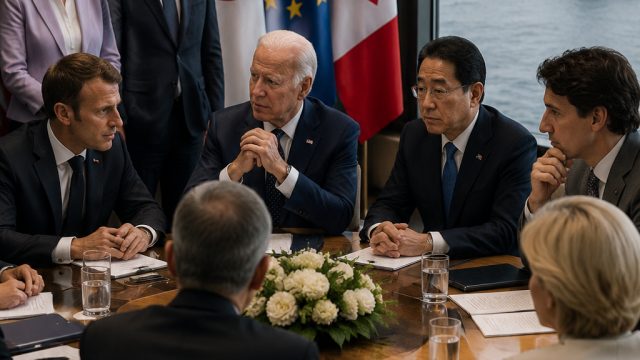
In recent weeks, escalating military activities by China near Taiwan have sparked alarm among several Western nations. The United States, United Kingdom, France, and Germany have collectively raised their voices, expressing serious concerns about China's increasingly assertive posture in the Taiwan Strait. This situation is unfolding at a time when geopolitical tensions are already high, making it more crucial than ever for countries to address the implications of these military maneuvers.
Heightened Military Tensions in the Taiwan Strait
The Taiwan Strait has become a focal point of international concern due to China's recent military exercises, which reportedly include aggressive naval patrols and the deployment of advanced military assets. These actions are perceived not just as exercises of sovereignty but as strategic moves aimed at asserting dominance over the region.
Joint Statement from Western Leaders
On a coordinated platform, leaders from the US, UK, France, and Germany issued a joint statement addressing these military activities. They expressed their unwavering support for Taiwan and emphasized the importance of maintaining peace and stability in the region. Their unified stance signals a significant shift in international diplomacy, highlighting the need for collective action against potential aggression.
Implications for Global Security
The increased military presence in the Taiwan Strait raises critical concerns regarding global security dynamics. The region has long been a point of tension, with Taiwan asserting its independence while China views it as a breakaway province. The potential for miscalculation in such a tense environment could lead to unintended consequences, which is a worry for nations far beyond Asia.
Economic Repercussions
Moreover, the economic implications of this military escalation cannot be overlooked. The Taiwan Strait is a major conduit for international trade, and any disruption could have far-reaching effects on global supply chains. Countries reliant on trade with Taiwan may find themselves facing significant challenges if military tensions escalate further. This situation emphasizes why it is essential for global leaders to engage in dialogue and seek peaceful resolutions.
The Call for Diplomacy
In light of these developments, experts emphasize the need for diplomacy. The importance of open lines of communication between the involved parties cannot be understated. As military actions increase, so does the risk of misinterpretation and escalation. Therefore, fostering an environment where dialogue is prioritized is vital for preventing conflict.
Public Sentiment and International Opinion
Public opinion in various countries also plays a crucial role in shaping foreign policy. Citizens are increasingly aware of international events and express a desire for their governments to take a stand on these issues. The unified response from Western nations reflects not only a political alignment but also growing public concern over China's military trajectory.
Conclusion: The Need for Vigilance and Engagement
As the situation continues to evolve, the world watches closely. The collective concern expressed by the US, UK, France, and Germany highlights the urgent need for vigilance and engagement in diplomatic efforts. The ongoing developments in the Taiwan Strait are not merely a regional issue; they hold significant implications for global stability and security. In this uncertain landscape, fostering cooperation and understanding remains paramount to ensuring peace and preventing conflict.





