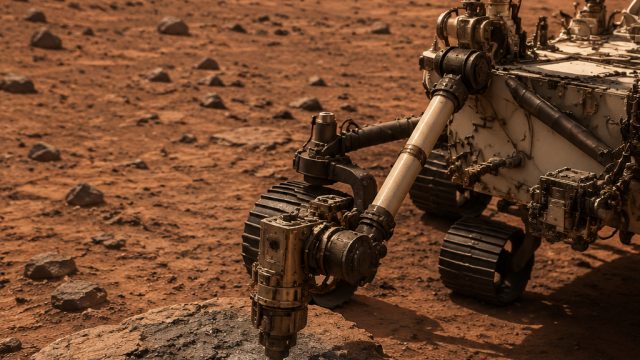
Recent findings from NASA's Perseverance rover have unveiled the presence of organic carbon in the Bright Angel rock formation on Mars. This discovery is stirring excitement in the scientific community as it may offer clues to the planet's past and its potential to host life.
Why This Discovery Matters Now
In the quest to understand extraterrestrial life, the detection of organic carbon compounds on Mars is monumental. Organic carbon is a fundamental building block for life as we know it, and its presence raises crucial questions about Mars' ability to support life in ancient times.
The Bright Angel formation, a site rich in geological history, has been the focus of scientific inquiry for years. The recent findings from the Perseverance rover indicate that Mars may have once had conditions conducive to sustaining microbial life, making this a pivotal moment in astrobiology.
Insights from the Perseverance Rover
NASA's Perseverance rover has been exploring the Jezero Crater, a site believed to have once been a lake, for nearly two years. Its latest findings, particularly the detection of complex organic molecules, are significant.
The Role of Organic Carbon in Life
- Formed through biological processes.
- Found in meteorites and comets, suggesting a cosmic connection.
- Essential for building amino acids, proteins, and nucleic acids.
How the Discovery Was Made
The rover utilized its advanced instrumentation to analyze rock samples and identify the organic carbon signatures. This process involved:
- Collecting rock samples from the surface.
- Using laser-induced breakdown spectroscopy to analyze their composition.
- Sending data back to Earth for detailed analysis.
The Implications for Future Exploration
The implications of discovering organic carbon on Mars extend beyond mere curiosity. Understanding the planet's past could inform future missions aimed at searching for life. As scientists refine their methods of exploration, this breakthrough could pave the way for more advanced missions, potentially including manned missions to Mars.
Connecting the Dots Between Mars and Earth
Researchers are excited about the possibility that life on Mars may share similarities with life on Earth. This raises several intriguing possibilities:
- Were there common origins for life on both planets?
- Could early Earth life have originated from Martian organisms?
- What can we learn from Mars to enhance our understanding of life's resilience?
Challenges Ahead in Martian Exploration
Despite the excitement, challenges remain in Martian exploration. The harsh environment of Mars, including its extreme temperatures and radiation levels, poses significant obstacles to future missions. Moreover, scientists must ensure that the methods used to analyze Martian samples are free from contamination to accurately interpret the data.
Continuing the Search for Life
The discovery of organic carbon in the Bright Angel formation is just the beginning. Future missions will aim to:
- Further investigate the geological context of the findings.
- Search for additional signs of ancient life.
- Plan for potential human habitation and resource utilization.
Conclusion: A New Chapter in Mars Exploration
As scientists continue to analyze the data collected by the Perseverance rover, we stand on the brink of a new chapter in our understanding of Mars. The detection of organic carbon is not just a scientific achievement; it is a beacon of hope for those searching for life beyond our planet. With ongoing research and exploration, we may soon uncover the secrets of Mars and its potential to host life.





